A thematic lecture on "Research on the Reconstruction and Development of Interpreters’ Competence in the Era of Generative Artificial Intelligence" was held by College of International Studies of Shenzhen University (SZU) on November 18th.
The lecture featured Li Xixi, Associate Professor and Vice Dean of College of Translation and Interpreting, Sichuan International Studies University (SISU), as the keynote speaker, with SZU Prof. Shang Xiaoqi moderating. Over 20 faculties and students attended.

Prof. Li Xixi shares the origin of interpretation studies
Building on the imperative of "telling Chinese stories for effective international communication", Prof. Li combed the history of Chinese and international research on interpreting competence. She noted that research into interpreting strategies -- such as simplification, supplementation, and conversion -- complements the analysis of interpreters’ competence to navigate complex scenarios.
Drawing on classic theories and cutting-edge practices, Li explained that academic focus in this field has shifted from bilingual proficiency to professionalism and psychology. She further elaborated on a multi-dimensional system of interpreters’ competence, which encompasses professional ethics, linguistic ability, knowledge, physical and psychological resilience, technology literacy, and interpreting strategies.
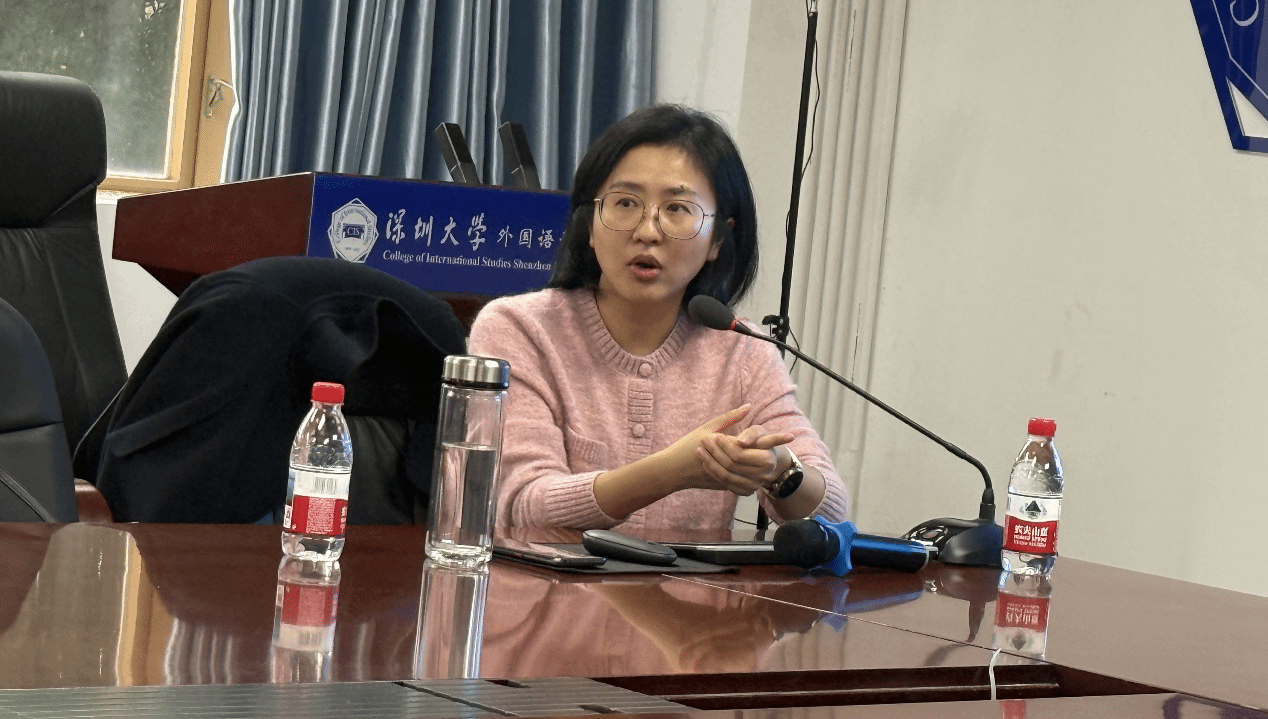
Prof. Li Xixi analyzes cutting-edge research on interpreting strategies
Citing the latest survey of the language service market in the Chengdu-Chongqing Economic Circle, Prof. Li highlighted the urgent demand for interpreters with strong professional ethics and interdisciplinary knowledge, especially those from "interpreting+finance" and "interpreting+international communication" background. Her insights aligned closely with SZU’s strategic focus on area studies and international communication
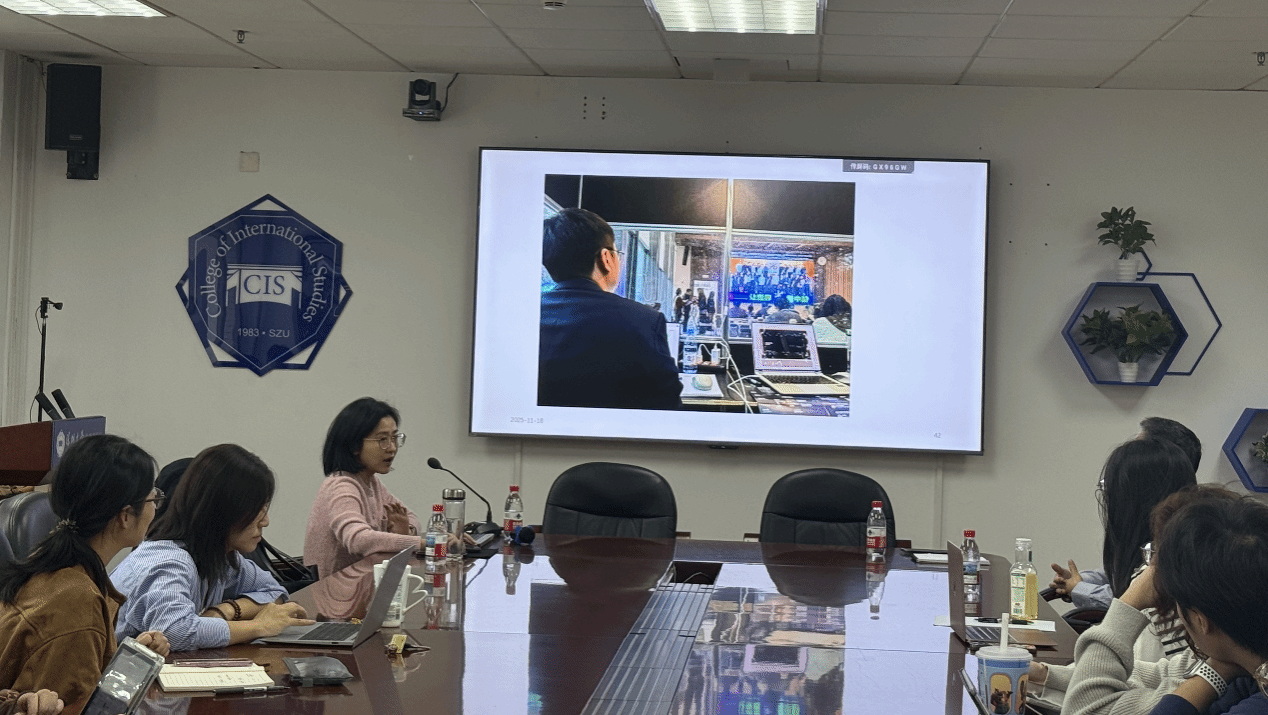
Prof. Li Xixi shares her teaching experience in interpreting practice
When it came to talent development, Prof. Li spotlighted SISU’s training initiatives, chief among them a seamless undergraduate-to-doctorate academic pathway. The university has tailored its programs to meet industry demands through targeted offerings: specialized medical translation courses and DTI program.
She also weighed in on the pros and cons of virtual simulation training for interpreters, advocating for closer university-industry partnerships to boost students’ ability to adapt to emerging technologies.
During the post-lecture Q&A, when attendees queried the appropriate boundaries for using AI tools in interpreting education, Prof. Li offered her advice, “Deploy technology within a solid theoretical framework, and always cross-verify information through multiple sources to ensure accuracy.”

A group photo of Prof. Li Xixi (front row, 3rd from left), SZU teachers and students
The lecture delivered cutting-edge insights into interpreting education reform in the AI era, charted a clear course for enhancing interpreters’ competence, and served as a valuable reference for boosting the cultivation of talents in international communication and driving the growth of the language service industry.


