Professor Dai Yonghong, Dean of the College of International Studies at Shenzhen University, attended the second “Phewa Dialogue” and delivered a keynote speech during this two-day event held in Chengdu from March 26 to 27.
The forum was co-hosted by Sichuan University and Nepal’s Tribhuvan University, and organized by the China-South Asia Studies Institute at Sichuan University. Dozens of government officials, think tank experts, and academic researchers from China and South Asian countries gathered to discuss the theme of “South Asian Development under Climate Change and Governance,” focusing on regional economic integration, green energy transition, and sustainable development.
At the opening ceremony, officials and representatives from China and Nepal highlighted the importance of the dialogue, noting that this platform provides an opportunity for South Asian countries to strengthen cooperation in addressing climate change, promoting low-carbon transformation, and advancing sustainable development.
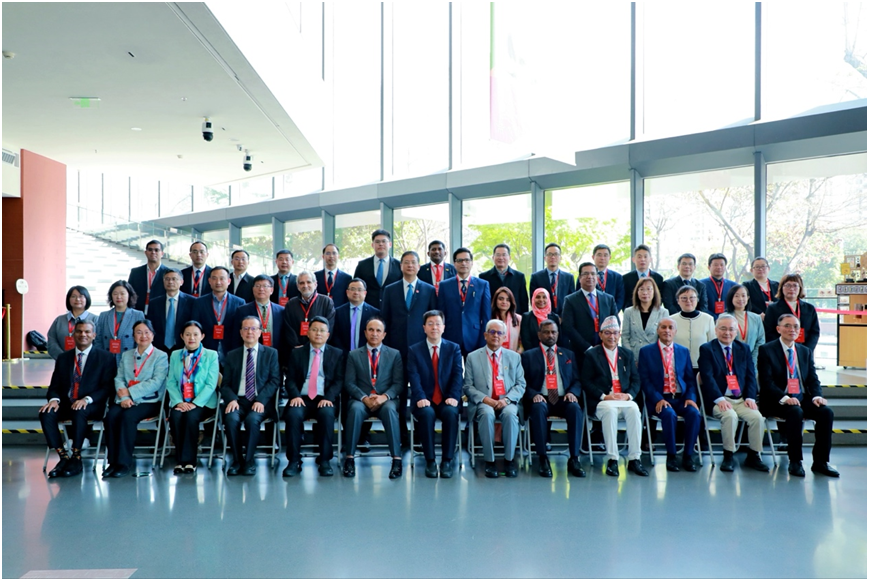
The dialogue featured three main topics: advancing regional economic integration in South Asia, promoting green development through clean energy and emerging industries, and achieving sustainable development through lifestyle transformation. Experts from leading universities and research institutions in China and South Asia such as Peking University and Lanka Institute of Sustainable Development participated in the in-depth discussions on these issues.
During the keynote session, Professor Dai delivered a speech titled “Building a Green Homeland: A New Paradigm for Himalayan Regional Economic Cooperation Driven by ESG Policies”. He noted that amid increasing ecological pressures in recent years, ESG (Environmental, Social, and Governance) principles have become a key solution for countries in the Himalayan region to balance development needs with environmental constraints.
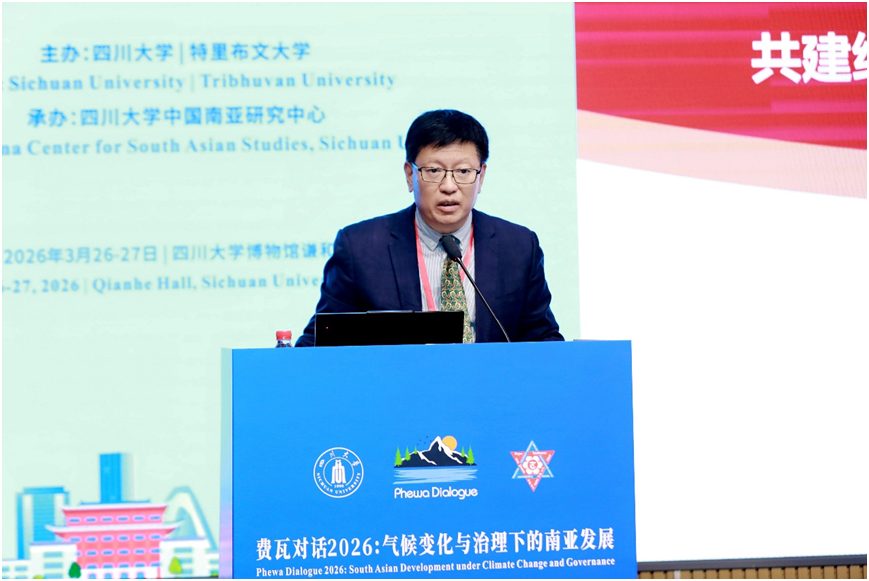
Professor Dai Yonghong delivers a keynote speech at the opening ceremony
1. Why ESG is a must for the Himalayas
Stretching about 2,400 kilometers, the Himalayan mountain range is not only a major geographical link connecting countries including China, Nepal and India, but also serves as the "Asian water tower", a vital water source for nearly 2 billion people worldwide.
The Himalayan region has three distinctive characteristics: ecological, cultural and geopolitical hotspot, according to Professor Dai Yonghong. Ecologically, every plant and tree helps regulate the global climate, so a "pollute first, clean up later" model won't work. Culturally, multiple ethnic groups and religions meet here, demanding respect for diversity. Geopolitically, several countries share borders, making economic cooperation highly sensitive. For these reasons, Professor Dai argues that GDP-driven models and resource-export-based cooperation are bound to face obstacles in the Himalayas.
ESG, however, provides a non-politicized technical language and evaluation framework based on international consensus. E (Environment): infrastructure must be green, energy structures must be clean, industrial development must be low-carbon. S (Social): projects must benefit local communities, respect the rights of indigenous peoples, and narrow the wealth gap. G (Governance): cross-border cooperation must be transparent and compliant, with effective mechanisms for coordinating interests.
2. How ESG is reshaping the logic of regional cooperation
Environment: from conquering nature to coexisting for mutual benefit. Ecological restoration can become a growth driver. For example, the region's rich forests can generate value through cross-border carbon trading, turning "lush mountains and lucid waters" into economic assets.
Society: from ordinary projects to benefit sharing. ESG is fundamentally about inclusiveness and shared development. It also reflects a smarter business logic: when companies see communities as partners and nature as infrastructure, they gain brand trust and a more resilient supply chain.
Governance: from bilateral bargaining to multilateral coordination. Rivers and mountains here know no borders. Unilateral moves can trigger butterfly effects. The answer is cross-border cooperation — joint drone patrols, disaster early warnings, and shared glacier research.
3. Toward a Himalayan ESG cooperation ecosystem
Looking ahead, Professor Dai Yonghong outlines three key initiatives for building a Himalayan ESG cooperation ecosystem.
First, establish a Himalayan ESG disclosure standard. Second, set up a Himalayan green development fund. Third, launch pilot projects along an ESG demonstration corridor.
The snow-capped Himalayas have stood in silence for eons, Dai says. They have witnessed the prosperity of ancient trade caravans, but also the sorrow of melting glaciers. Building a shared green homeland, he says, is not only a responsibility for our generation. It is also a solemn commitment to this sacred land.